🎯 Direct staking
Use direct staking to maximize APY, maintain transparency, and stake with control.
The Vault on Solana is a stake pool that allows users to stake their SOL in a decentralized and transparent manner. Users have the ability to delegate their stake to a specific validator through a process called direct staking. The validator does not need to be on The Vault's approved list. This document explains how direct staking works and its impact on the pool.
How direct staking works
Direct staking follows this step-by-step process: you direct your stake to a validator, and you can add leveraged staking for a higher APY.
Directing stake to a validator
The user goes to The Vault dApp, chooses a specific validator on the Direct Stake page and sets their wallet to it by approving a transaction. In this example, Validator X. For the steps, see How to direct stake.
All vSOL in the wallet that is set to Validator X will be used, including vSOL from that wallet in a supported location such as Kamino. The stake bot ensures that specific validator will receive the amount of vSOL that was directed to it (Figure 3.12).
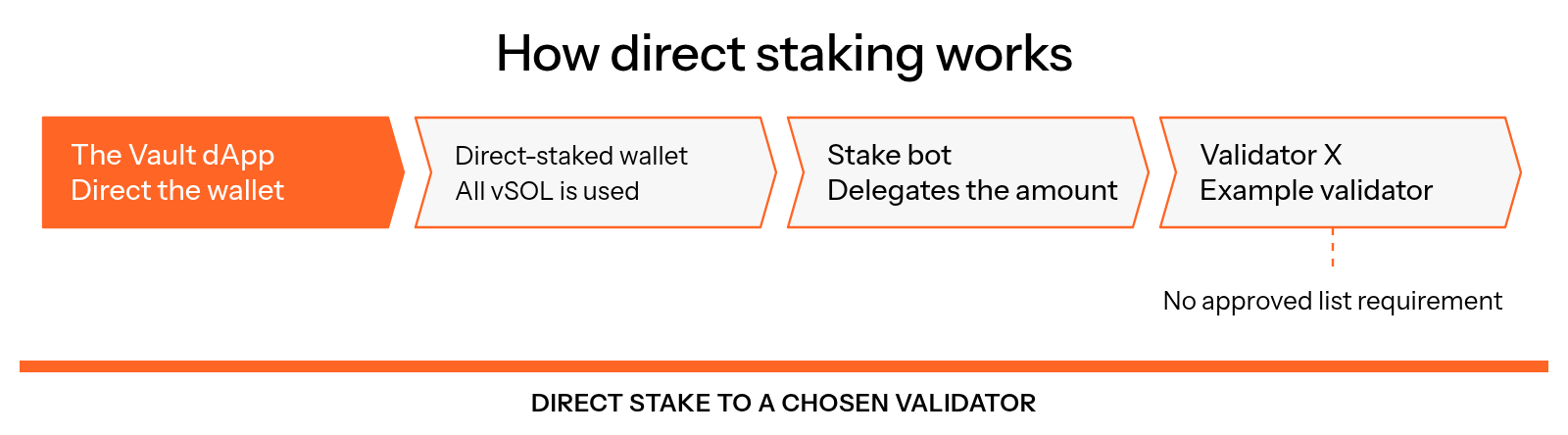
Figure 3.12: How direct staking works
Leveraged staking and APY
When users deposit vSOL into Kamino Multiply, they borrow SOL to multiply their staking position. This functions similarly to manual leverage, where users loop: deposit SOL → get vSOL → borrow SOL → deposit borrowed SOL → get more vSOL → repeat.
This results in a higher APY for the user, as their exposure to staking rewards increases (Figure 3.13).
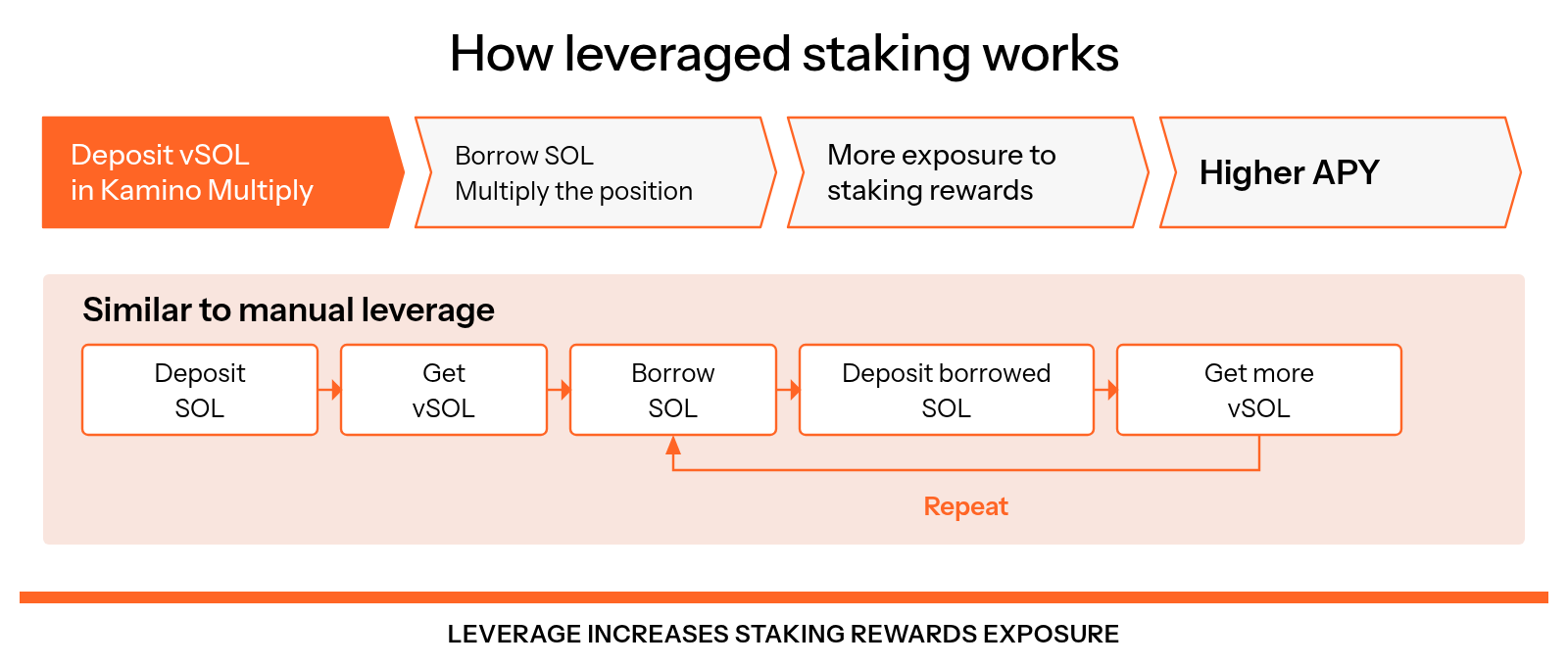
Figure 3.13: How leveraged staking works
The user will be able to see the Kamino amounts on their Direct Stake dashboard once they connect their wallet. There may be a delay in between updates for this data.
Impact of direct staking
Direct staking affects the pool in two ways: validator weighting and transparency.
Increased validator weighting
Large direct stake deposits (leveraged or not) will shift the percentage of total TVL assigned to a validator. However, the Direct Stake Leaders bucket and the Elite Performance bucket still give each qualifying validator an equal share of undirected stake (Figure 3.14).
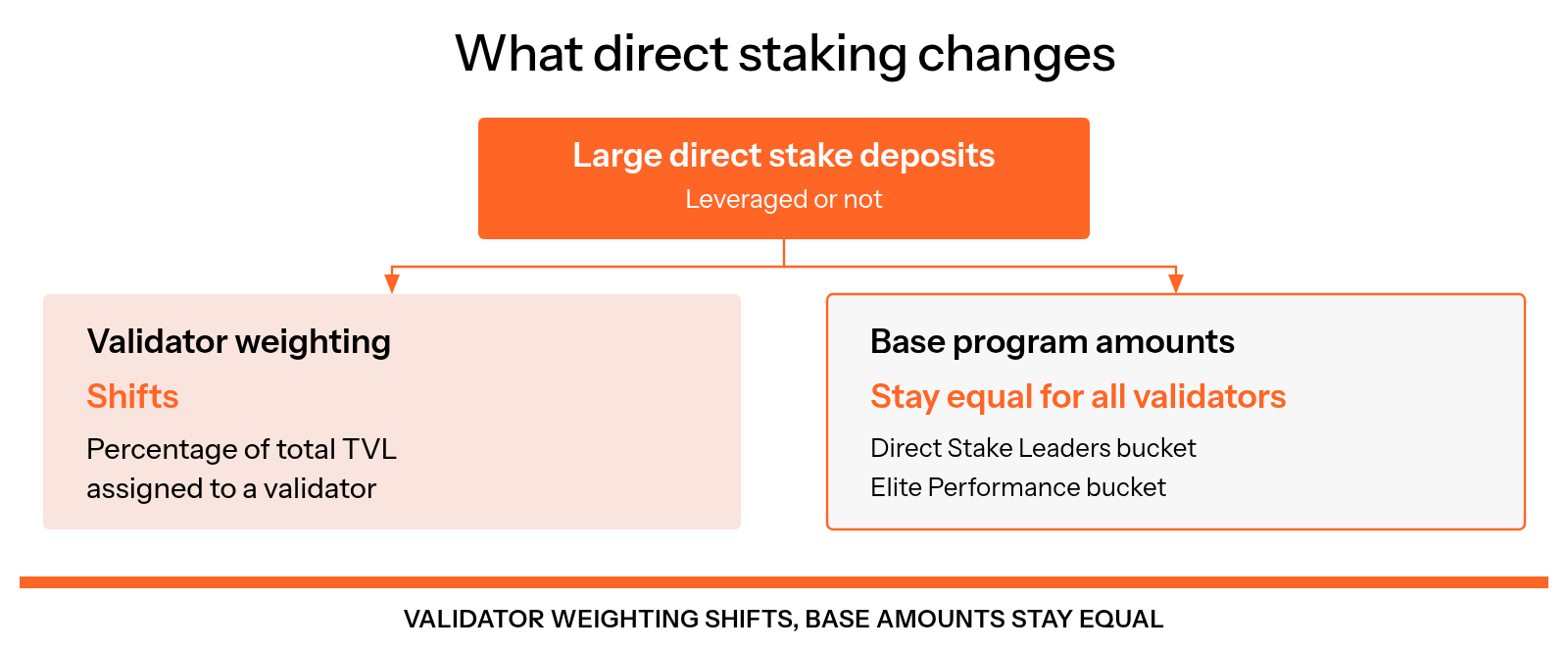
Figure 3.14: What direct staking changes
Transparency and on-chain data
The Vault maintains full transparency regarding validator stakes. Users can track stake distribution on the Validators page and in these public repositories:
Conclusion
Direct staking in The Vault provides users with enhanced control over their stake while maintaining a fair and transparent distribution model. Through leveraged staking via Kamino Multiply, users can maximize APY, and all staking activity remains fully on-chain and auditable.